

This checklist covers everything you need to handle before, during, and after your move to Salt Lake City: neighborhood research, moving logistics, Utah driver's license transfer, and utility setup. Salt Lake County's full-year 2025 median sales price was $550,000 (up 1.9% year-over-year, per the Salt Lake Board of Realtors 2026 Housing Forecast Report), neighborhoods range from urban walkable to quiet suburban, and ski runs are genuinely within 45 minutes of downtown. Every section maps to a real action item with a real deadline.
Salt Lake City Housing: Know the Market Before You Arrive
Salt Lake County is a seller's market: as of July 2026, inventory sits at 3.1 months of supply and the county-wide median price is $552,720 (July 2026 single-month median, all property types, per WFR-MLS data). A seller's market is defined as fewer than six months of available inventory; Salt Lake County's 3.1-month supply places it squarely in that category. Within Salt Lake City proper, the median climbed to $650,000 in July 2026 (SFHs, Condos & Townhomes combined, per WFR-MLS), while more affordable entry points exist in suburbs like West Jordan (median $521,000, per WFR-MLS July 2026).
What this means for you as an incoming relocator: get pre-approved before you start touring, and don't expect to lowball. Homes spent a median of 51 days on market across Salt Lake County in July 2026, slightly longer than the frantic 2021-2022 pace, which gives buyers a bit more breathing room without removing the urgency entirely.
If you're still weighing neighborhoods, the Salt Lake Valley offers distinct choices:
| Community | Typical Buyer Profile | Approximate Price Range | School District |
|---|---|---|---|
| Sandy | Established suburban, strong schools | Mid-range to upper-mid | Canyons |
| Draper | Mountain access, newer construction, tech commuters | Upper-mid to premium | Canyons |
| Cottonwood Heights | Mountain proximity, mature community | Upper-mid | Canyons |
| Holladay | Tree-lined streets, close to urban core | Upper-mid to premium | Granite / Canyons |
| South Jordan | Max square footage per dollar, growing amenities | Mid-range | Jordan |
| West Jordan | Value-oriented, established community | Entry to mid-range | Jordan |
Before your first offer, run the numbers. Utah's flat 4.45% state income tax rate (Utah SB 60, enacted 2026 legislative session) and an effective property tax rate of approximately 0.48% on owner-occupied housing (Tax Foundation, 2026) make the monthly cost of ownership more manageable than headline prices might suggest, especially for buyers relocating from higher-tax states.
The affordability calculator lets you pressure-test your budget against current rates, and browsing current inventory across the valley gives you a real-time view of price points and property types before you commit to a neighborhood.
8-6 Weeks Before Moving Day: Research and Logistics
Six to eight weeks out, your three most time-sensitive priorities are choosing a neighborhood, locking in a moving company, and researching school enrollment deadlines. Decisions made in this phase ripple through everything that follows.
Nail down your neighborhood first. Commute times in the Salt Lake Valley vary dramatically depending on which side of the valley you land on. If you're working somewhere along the Silicon Slopes tech corridor off I-15, a home in Draper or South Jordan can cut that commute significantly. Lock in your work address before shortlisting properties.
Get at least three moving quotes. Long-distance full-service moves typically run from the mid-thousands into five figures depending on household size and distance. Book early. Summer months see the highest moving demand, and Salt Lake City's consistent population growth keeps local movers busy year-round.
Research school districts. Salt Lake County is served by several districts, each with distinct performance profiles:
Canyons School District covers Sandy, Draper, Cottonwood Heights, Holladay, and surrounding areas in the southeastern valley, known for a focus on innovation and modern facilities.
Jordan School District serves the western and southern valley communities, including West Jordan and South Jordan, not Sandy or Draper, which fall under Canyons.
Check individual school ratings and enrollment deadlines. Some magnet and charter programs have application windows months in advance.
Start your moving budget. Beyond the truck or moving company fee, budget for: first/last month rent or closing costs, utility deposits, school enrollment fees if applicable, Utah vehicle registration costs, and an emergency cushion. The Salt Lake Valley's altitude (roughly 4,300 feet at the valley floor) means your body will need a week or two to adjust, so factor in that lower-energy first week when planning your unpacking timeline.
4 Weeks Out: Documents, Utilities, and Address Changes
Four weeks before your move date, shift from planning to execution. Gather key documents, schedule utility connections, and start your address change paperwork now, not the week you arrive.
Gather and organize key documents:
| Document | Purpose | Needed For |
|---|---|---|
| Vehicle title & current registration | Proof of ownership | Utah DMV registration |
| Proof of Utah auto insurance | Minimum liability coverage | DMV registration |
| Birth certificates / passports | Proof of identity | Driver's license, school enrollment |
| Social Security documentation | Identity verification | Driver's license transfer |
| Medical & immunization records | Health and school requirements | School enrollment |
| Lease or closing documents | Proof of Utah residency | Driver's license, voter registration |
Schedule utility connections before you arrive. Salt Lake City's primary utility providers:
| Service | Provider | Contact |
|---|---|---|
| Electricity | Rocky Mountain Power | (888) 221-7070 or online |
| Natural gas | Dominion Energy Utah | (800) 323-5517 or online |
| Water, sewer & trash | Salt Lake City government | (801) 483-6900, Mon-Fri 8 am-5 pm |
| Internet | Multiple providers | Schedule at least 2 weeks out |
Begin address changes. USPS mail forwarding is the floor, not the ceiling. Also update: your bank and investment accounts, insurance policies (auto, health, renters/homeowners), subscription services, your employer's HR department, and the IRS (Form 8822 for a change of address).
Transfer school and medical records. Request transcripts, immunization records, and any individualized education plans from current schools. Ask your doctors, dentists, and specialists to forward records or prepare copies to bring with you.
Moving Week: Final Preparations and Moving Day
In moving week, your three priorities are confirming logistics with your mover, packing a day-one essentials box, and doing a final walkthrough of your current home before the truck leaves.
Pack a day-one essentials box that travels in your personal vehicle, not on the truck. Include: medications, phone chargers, a change of clothes for each family member, critical documents (IDs, closing paperwork, moving contracts), basic tools, toilet paper, and pet food if applicable. You will need these items before the first box is unpacked.
Confirm all logistics with your moving company 48-72 hours out: arrival time, both addresses, payment method, and the crew lead's contact number.
Do a room-by-room walkthrough of your current home before the movers leave. Check attic, garage, built-in shelving, and outdoor spaces. Photograph every room after cleaning for security deposit or post-closing documentation.
On moving day in Salt Lake City, be aware of seasonal conditions. Summer (June-August) temperatures in the valley regularly reach the upper 90s°F; schedule the heaviest lifting for morning hours and keep water accessible for your crew. Winter moves require planning around snow and ice; check road conditions and build extra time into your schedule.
After Arrival: Utah Residency Requirements
This section has hard deadlines. Missing them carries real consequences; here's a summary, then the detail.
| Requirement | Deadline | Key Documents Needed | Where to Go |
|---|---|---|---|
| Vehicle registration | 60 days from establishing residency | Out-of-state title, current registration, proof of UT insurance, proof of identity/residency | Utah DMV office |
| Driver's license transfer | Immediately upon establishing residency | Out-of-state license, birth certificate or passport, SSN documentation, 2 proofs of UT residency | Driver License Division |
| Voter registration | At least 30 days before an election; deadline is 11 days before Election Day | Name, address, state ID or SSN | vote.utah.gov or county clerk |
| School enrollment | Year-round; allow processing time for mid-year transfers | Proof of residency, immunization records, birth certificate, prior school records | Assigned school district |
Vehicle Registration (60-Day Deadline)
Utah law requires new residents to register and title their vehicle within 60 days of establishing residency. The process, per the Utah DMV's out-of-state transfer overview, involves:
Gathering your out-of-state title (or proof of a lienholder), current registration, proof of Utah auto insurance, and proof of identity and residency.
Completing a VIN inspection (Form TC-661, available at DMV offices).
Emissions testing, required in Salt Lake, Davis, Cache, Utah, and Weber counties.
Visiting a DMV office to finalize registration and titling.
A 30-day temporary permit ($6) is available if you need extra time gathering documentation.
Driver's License Transfer (No Grace Period)
Unlike some states, Utah has no official grace period for transferring your driver's license. State law requires you to hold a valid Utah license once you establish residency. Bring to the Driver License Division: your current out-of-state license, proof of identity (birth certificate or passport), Social Security documentation, and two proofs of Utah residency (lease, utility bill, or bank statement). A vision test is required; no written or road test if your out-of-state license is current and valid. The standard license fee is $52 (valid up to 8 years for eligible applicants).
Voter Registration
Register at vote.utah.gov or through your county clerk. You must be a Utah resident for at least 30 days before an election to be eligible, and the registration deadline is 11 days before Election Day at 5:00 PM. Note: HB 300 (signed March 2025) begins phasing out Utah's universal vote-by-mail system. Registered voters will continue to receive ballots automatically through 2028, and starting in 2026 must include the last four digits of a driver's license, state ID, or Social Security number on the ballot return envelope, with full opt-in enrollment for future mail ballots beginning in 2029.
School Enrollment
Contact your assigned school district directly for enrollment requirements. You'll typically need: proof of residency, immunization records, birth certificate, and previous school records. Most districts allow enrollment year-round, but mid-year transfers may require a brief processing window before your child's first day.
Settling In: The First Two Weeks
Once the boxes are in and the utilities are on, this phase is about converting a new house into a functional home base.
Safety walkthrough: Test all smoke and carbon monoxide detectors; locate the main water shutoff, circuit breaker panel, and gas shutoff valve. Change or rekey door locks; you don't know how many copies of the previous keys are in circulation.
Introduce yourself to neighbors. Salt Lake Valley communities are generally known for their tight-knit, neighborly culture. A simple introduction opens the door to practical local knowledge: which HOA rules matter, where the best nearby trailheads are, which pizza place actually delivers to your street.
Adjust to the altitude and climate. At roughly 4,300 feet, Salt Lake City sits at an elevation that affects newcomers in small but noticeable ways: expect slightly faster dehydration and some breathlessness during your first week of physical activity. Humidity is lower than most of the country. In winter, the Salt Lake Valley can experience temperature inversions that temporarily affect air quality; on those days, the air quality index is worth checking before heading out for a run.
Explore your commute options. The Utah Transit Authority (UTA) operates TRAX light rail, FrontRunner commuter rail, and bus lines across the Wasatch Front. If you're living near a TRAX line, it can be a genuine alternative to daily driving, especially for commutes into downtown Salt Lake City or to the University of Utah. For most suburban residents in the western and southern valley, a personal vehicle remains effectively necessary.
Getting Local Help Along the Way
This checklist covers the paperwork, but the neighborhood decision at the top of it is the one worth getting right first. The Luxury Agency is a team of more than 30 REALTORS® based in Salt Lake City, co-led by Parry Dean Ward and Aaron Pehrson, and several team members work specifically with relocating families, first-time buyers, and clients who'd rather have the process explained by a bilingual agent. If you're still comparing neighborhoods against your must-haves, that's worth talking through before you're touring on a tight timeline. The team can be reached at +1 (801) 390-0545 or team@luxuryagencygroup.com.
FAQ: Moving to Salt Lake City
- How long do I have to register my car after moving to Utah? New Utah residents have 60 days from the date of establishing residency to register and title their vehicle with the Utah DMV. There is no comparable grace period for transferring your driver's license; that is required immediately upon establishing residency.
- What is the cost of living like in Salt Lake City compared to other major cities? Salt Lake City's cost of living runs modestly above the national average, driven primarily by housing costs. The state's flat 4.45% income tax rate (Utah SB 60, 2026 legislative session) and an effective property tax rate of approximately 0.48% on owner-occupied housing (Tax Foundation, 2026) help offset housing costs relative to high-tax markets elsewhere. Utility costs tend to run below national averages; Rocky Mountain Power and Dominion Energy Utah serve the valley at competitive residential rates. The affordability calculator is a useful tool for translating those figures into a monthly budget before your search.
- Which Salt Lake City suburbs are best for families? It depends on your priorities. Sandy homes for sale and Cottonwood Heights listings offer established neighborhoods with strong school options in the Canyons District. South Jordan and West Jordan provide more square footage per dollar with growing community amenities and fall within the Jordan School District. Holladay offers a walkable village feel with mature trees, and Draper sits at the Point of the Mountain, popular with professionals working along the Silicon Slopes corridor.
- Do I need a car in Salt Lake City? For most residents, yes. UTA's TRAX and FrontRunner systems serve major corridors well, but suburban areas, particularly the southern and western valley, are designed around personal vehicles. If your daily commute is to downtown Salt Lake City or the University of Utah and you live near a TRAX station, car-free or car-light living is feasible. Outside of those corridors, a personal vehicle is effectively required.
- What should I do first when I arrive in Salt Lake City? Immediately: confirm your utilities are active, do a safety walkthrough of your home (smoke detectors, locks, water shutoff), and unpack the essentials box you kept in your personal vehicle. Within your first week: begin the driver's license transfer at the Driver License Division and schedule a VIN inspection if you haven't already. Register to vote at vote.utah.gov. Introduce yourself to neighbors and locate your nearest grocery store, pharmacy, and urgent care.
- Is Salt Lake City a good place to buy a home right now? Salt Lake County remains a seller's market, with just 3.1 months of inventory as of July 2026 (per WFR-MLS data). The county-wide median was $552,720 in July 2026 (single-month, all property types, per WFR-MLS), and the Salt Lake Board of Realtors 2026 Housing Forecast Report projects prices to remain stable through 2026 and into 2027. For relocators planning to stay five or more years, the valley's long-term demand fundamentals, driven by job growth, in-migration, and a young household base, support ownership over renting.
FROM OUR BLOG

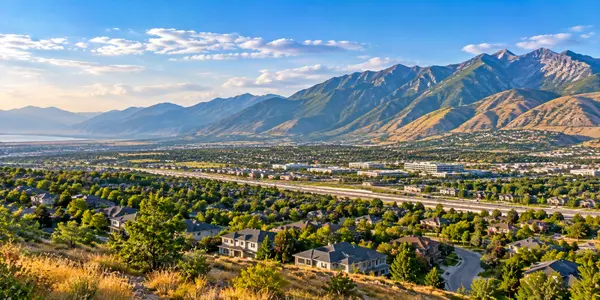
Is Draper a Good Long-Term Real Estate Investment?
A Draper real estate investment can make sense for buyers seeking long-term appreciation, regional employment access, and owner-occupier demand, rather than a quick, high-yield play. The most supportable case is property-specific: Compare current closed sales, achievable rents, carrying costs, HOA r

Selling Your Home in Salt Lake City: Step-by-Step Guide
Selling your home in Salt Lake City depends on getting the order right: establish your timing, set a supportable price, prepare the property, disclose known information, and compare offers by their full terms. Whether you have owned for two years or twenty, are downsizing after the kids have moved o

First-Time Home Buying Tips for Military Families
First-time home buying tips for military families start with a realistic payment, a clear view of VA loan eligibility, and an exit plan for a future PCS. Buying while serving is exciting and can look different from a civilian purchase because housing allowances, duty schedules, and changing assignme